Cycling13 June 2026
British National Time Trial Championships 2026: Lampeter, Wales
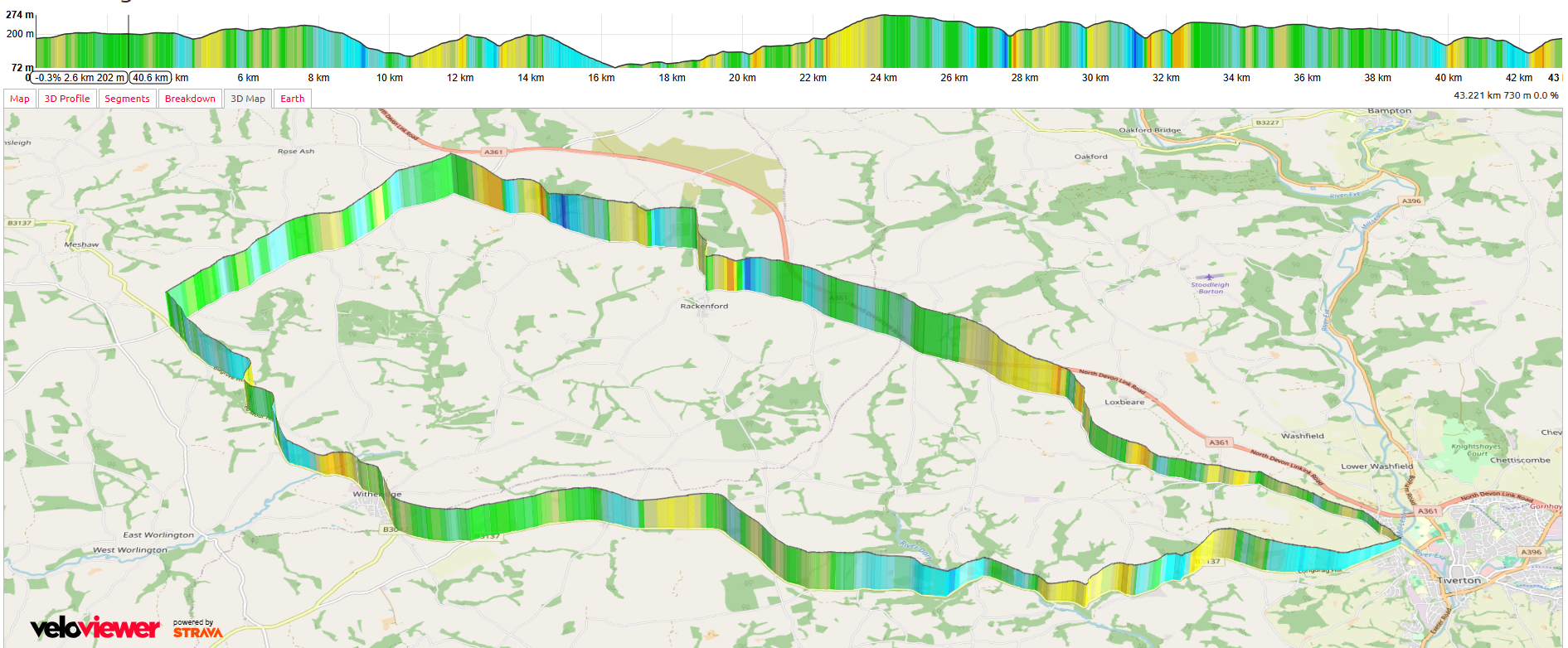
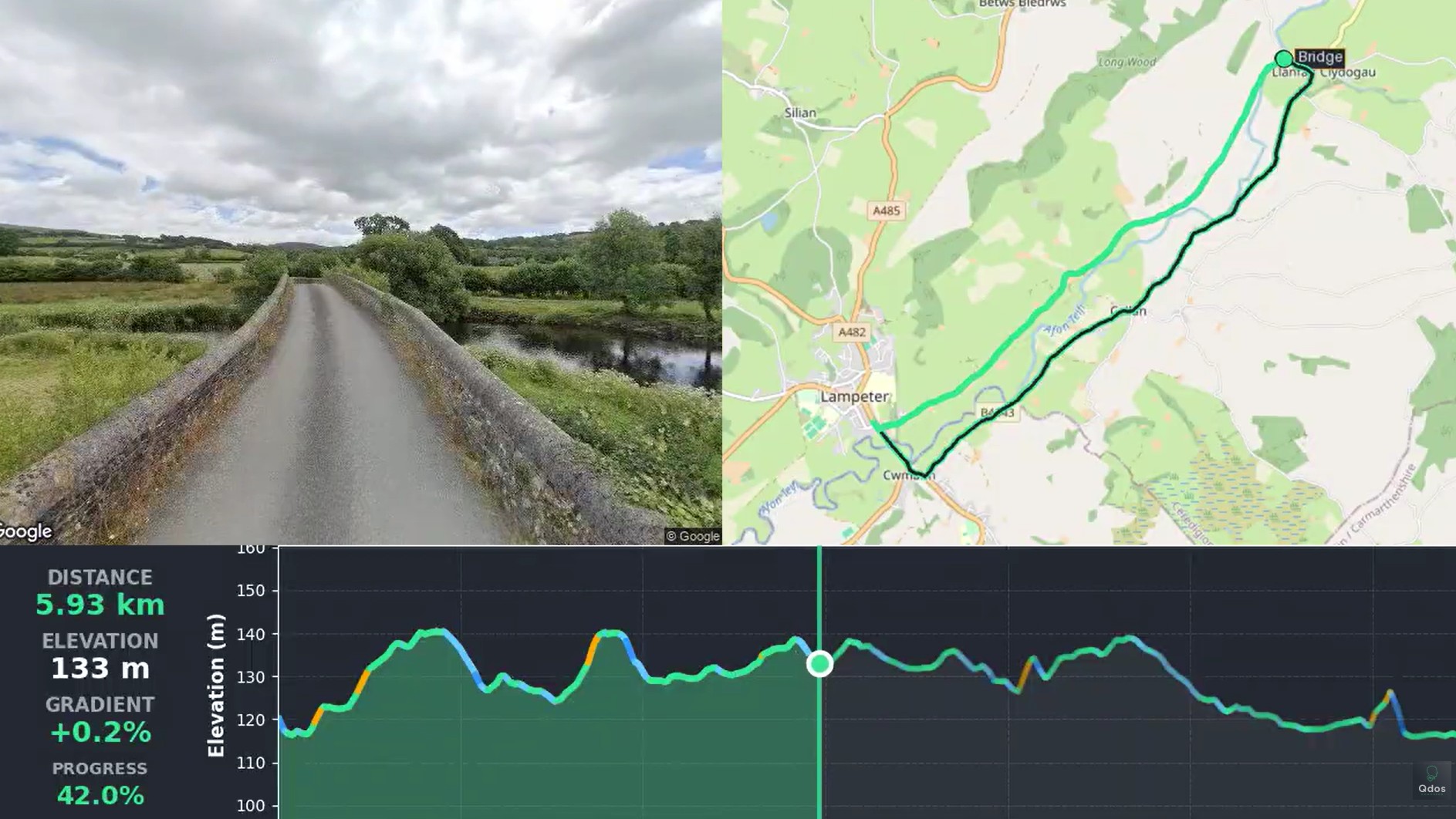
Course analysis of the 2026 British National Time Trial Championships in Lampeter, Ceredigion on Thursday 25 June.
By JamieRead more →

You put the work in this year. Some rides went well. Others left you wondering why the training never quite showed up when you wanted it to.
The tempting answer is another plan. More hours, a different app, a bigger target. Maybe even a better bike... Surely not!
Before you do that, consider this: the plan was probably never the problem.
Book a free season-review call
Ten years ago, a well-structured plan was genuinely worth paying for. Today you can generate one in thirty seconds, for nothing, and it will look entirely sensible. Intervals in the right places. Progression week to week. A taper before your event.
However, plenty of riders following exactly that still find themselves stuck.
Not because the sessions are wrong. Because a plan is a set of instructions — and instructions only work if the thing receiving them behaves predictably.
You don't.
This is the part most training advice quietly skips.
A machine comes apart. Each component does one job, the same way, every time. Find the broken part, replace it, and the machine works again. That model is so familiar we apply it to ourselves. Therefore, we aim to measure everything so that we can understand it.
You aren’t built like that. You are a network. Breathing, fueling, muscle recruitment, hormones, immune response — these shift together and continuously, each one interacting with others and altering their behavior as a consequence. Change one, and you change several, some of which won’t surface for weeks.
And everything you do lands on that same network. A hard interval session, a bad night’s sleep, a work deadline, a virus: different stimuli, but they converge on the same stress machinery and leave much the same wear behind. Your body doesn’t label the wear by where it came from.
It’s closer to a garden than an engine. You can’t shout at flowers to grow faster. You look at how things are doing, change the conditions, and watch what happens next. A garden also doesn’t get there in a season — but once it’s established, keeping it takes a fraction of what building it took.
That isn’t a soft metaphor used to avoid the science. It is what the science increasingly says: bodies are complex, adaptive and context-dependent, and treating them as machines is why so much confident training advice doesn’t survive contact with a real person.
We use power data. We look at heart rate. They are useful, and we understand them well.
But it’s worth being clear about what a training-load number actually measures: what you did. Not what your body was able to absorb. Those are different questions, and only the second one informs us how your body will adapt to the stimulus.
Your capacity to absorb training changes constantly — with accumulated fatigue, sleep, life stress, heat, and what you’ve already adapted to. Which means a session prescribed at the “right” intensity can be an easy aerobic ride one week and a genuinely hard effort the next, at identical watts.
The instrument that picks that up first isn’t on your handlebars. It’s you. Feeling flat, dreading a session you used to enjoy, needing more effort for the same numbers — those signals arrive weeks before a device or a blood test agrees. Riders are trained to distrust that as “just feeling sorry for myself”. It is usually the earliest accurate data you have.
The data narrows the question. The conversation answers it.
The other thing a plan can’t see is the rest of your life.
Your body doesn’t file work pressure, poor sleep, a young family and a hard interval session into separate accounts. They accumulate together and leave a similar mark. That accumulated wear has a name — allostatic load — and it’s why a perfectly reasonable training week can flatten you one month and feel easy the next.
It also doesn’t build up in a straight line. You compensate, and compensate, and appear fine — right up until you don’t. The illness, the niggle or the sudden loss of form seems to arrive from nowhere. It didn’t. It had been building for weeks, and the signals were in how you felt.
Which is why “how much training can I handle?” is the wrong question, and “how much can I handle this week, given everything else?” is the right one. No plan written in advance can answer that. It has to be reviewed, by someone who knows you, as it happens and tease that information out of you.
Here’s the part we’d most like you to take from this article.
A typical weekly coaching conversation at Qdos runs about thirty minutes. Roughly one of those minutes is about the training plan.
1
minute
the training plan
29
minutes
how your body is actually responding
The other twenty-nine are about how your body works. Why last week felt heavy. What that ride was genuinely asking of you. Why the session that felt easy did more than the one that hurt. What’s coming at work, and what that means for the fortnight ahead.
That is not padding around the real product. That is the product. Coaching has often been understood as writing a plan and updating it — a hangover from when people believed in the magic session, the magic week, the secret protocol. There is no magic session. And now that software will write and rewrite a plan instantly and for free, plan-writing has stopped being the valuable part of coaching. Arguably it never was.
What can’t be generated is the thing that makes a rider independent: understanding your own physiology well enough to make good decisions about it.
“In the short time we’ve been working together I’ve learnt so much more about training — how it works, how my body works and how it responds.”
Alex was putting real time into the bike and working through one training app after another, without seeing the benefit or knowing what he was doing right or wrong.
That is the difference between following something and understanding it. A rider who knows what a session is for, who can tell fatigue from under-recovery, and who understands how their week actually lands on their body, can manage themselves — with expert input where it counts, rather than instructions to obey.
It’s also why we’d rather you eventually outgrow us than depend on us.
The gains you make in your first structured year are largely compensation — real, but partly borrowed. The changes that stay are slower, smaller per block, and additive across years.
That’s not patience for its own sake. It’s a reason to stop judging your training by the last eight weeks, which is roughly all any fitness metric can see. Small, sustainable decisions now compound into something considerable later. It is the same logic as a pension, applied to your body.
You don’t need a worksheet, a spreadsheet or an email address for this. Open the notes app on your phone.
Write down three things that went well this season. Not results! We all want results - that is a by product of training well. Think of process goals: how you trained, slept, ate. A habit that finally stuck.
Then three things that could have gone better. Again, not results. The session you kept quietly skipping. The fortnight that flattened you. The event you rode without knowing the course demands.
Six lines.
Now read them back and see what you uncover.
That gap isn’t a gap in your discipline. It’s a gap in explanation, and it is the one thing another plan will not close. And that is the one thing we pride ourselves on helping you discover.
Writing the six lines is the easy half. Whatever you decide has to land somewhere — and for most riders, it lands over the winter.
Not because winter is when you suffer. Because the block furthest from your events is the only one with room for the things that take time: the aerobic work that costs little fatigue and can therefore be built on, the strength work that wants eight weeks and two sessions a week before it gives anything back, the neglected weak points, and the ordinary routines that make a week repeatable.
That is the capacity work. Do it and you arrive at next season able to absorb the training that actually makes you fast.
Which is why the review is worth doing now rather than in February. The decisions it leads to need the winter to happen in.
Do the exercise on your own and, if it gives you a clear answer, act on it — you don’t need us for that.
What’s harder alone is the next part: working out which of the six matters most, or what things to change to address them or even unable to think of the six-points. So this is where the conversation, the coaching, makes the difference.
So send them over. Send them to us, rough and half-formed as they are. We have read a lot of these over the years and happy to help.
You can do that two ways: message us on Instagram at @qdos_coaching, or book a free call and talk it through properly.
The call is a conversation — not a fitness test, and not a commitment to buy coaching. If working together looks useful, we’ll explain the next step. If it doesn’t, we would have hopefully still helped you in preparation for the next season.
Book your free season-review callKeep reading
New season, new approach
Three things that went well, three that could have gone better. Bring them here and we’ll tell you which one to pull on — before the winter you’d act in has gone. Free, with Jamie or Ifan.
Bring your six lines, a goal, or just the feeling that this year could have gone differently. No power meter, spreadsheet or completed worksheet required.
Prefer email? jamie@qdoscoaching.com